The reading-writing connection in the age of AI? Absolutely!
A common question recently is whether the reading–writing connection still matters in an era of widespread content generation. The answer is yes—but only when students are required to meaningfully engage with text.
First, it helps to broaden how we define text. If students can read, view, or listen to it, it is text—even when it is multimodal or AI-generated.
In the updated Paraphrasing: The reading–writing connection guide, we focus on instructional adjustments that support thoughtful responses to text and feedback in process-centered writing environments. These practices make thinking visible, require engagement with sources, and—when AI is positioned as a learning support rather than a shortcut—reinforce academic integrity. Helping students value these processes, especially when AI offers instant responses, is foundational to AI literacy.
AI chat tools illustrate this distinction clearly. Copying and pasting AI-generated content does not require comprehension or decision-making—there’s the “no.” However, when assignments clearly define responsible AI use, students can engage with AI output by evaluating accuracy, bias, and relevance, comparing it to task expectations, and revising based on feedback. That work is interaction with text.
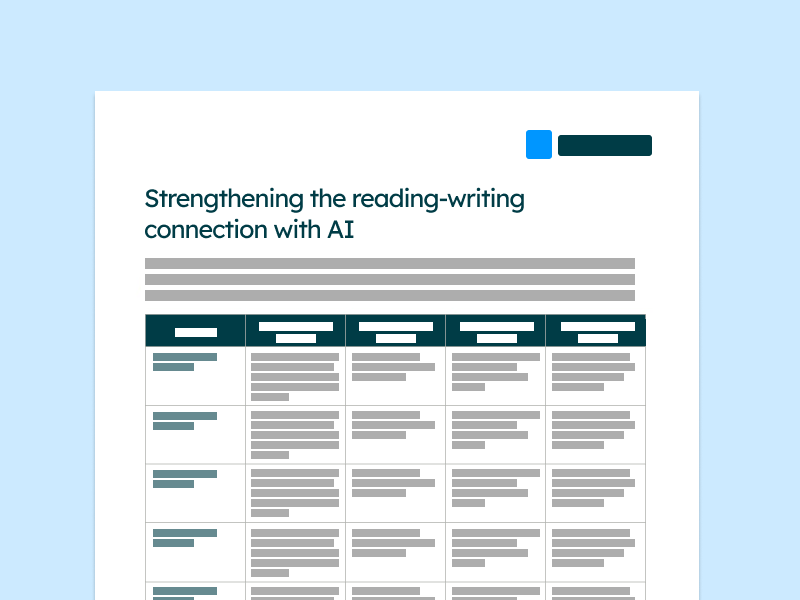
Importantly, supporting this shift does not require redesigning curricula. Small adjustments to prompts and directions can meaningfully strengthen the reading–writing connection. Our latest infographic, Strengthening the reading–writing connection with AI, highlights practical examples that can be applied across contexts.
👉 Secondary examples? ✅
👉 Higher education examples? ✅